Homepage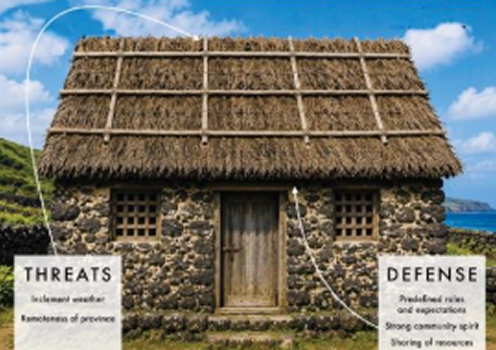
Details of Study
Background
In the Philippines, the phases of the Moon are represented by several creatures that swallow it. In the Visayas, it is a serpent, bakunawa; in Mindanao, it is a bird, minokawa; in Luzon it is a dragon, laho, or mayari. During eclipses, many indigenous groups would make loud noises using gongs and pots to force the creature to release the moon and return it to the sky.
The beliefs of the Ivatan forefathers were shaped and reinforced 3,000 to 4,0000 years ago by Autronesian seafarers who migrated from the Tao people of Taiwan and later Northern Luzon. These beliefs persisted for 115 years throughout the Spanish occupation in the 16th century.
The First Skies Project intended to reference the Jama Mapun study to document current worldview perceptions of the Ivatan community in Batanes by focusing on traditions and beliefs regarding celestial objects. The study recorded the images and starplots that they see in the night sky at one point in time, as a starting point for preserving narratives that are in danger of disappearing.
Methodolody
The method employed is naturalistic inquiry, particularly grounded theory, which describes a phenomenon in order to understand it and to explain and give it meaning. In this type of inquiry, theories are not viewed as grand conceptual schemes that are merely waiting to be verified with “data,” but as a source of information leading to more research. The phenomenon that is relevant here is the beliefs and behaviors of the Ivatan people regarding celestial objects and events in the night sky. It was hypothesized that the stars and moon would be used in agriculture, fishing, navigation, and daily activities.
Nineteen one-on-one interviews and one group interview were conducted in the islands of Basco and Sabtang. The one-on-one interviews ranged from the ages of 45 to 85, with most of them falling between early seventies to early eighties. Three of the one-on-one interviews were women while the fishermen association were all men. This imbalance in gender was not a concern in data collection because all of the workers were involved in both agriculture and fishing and since fishermen were always men, the male respondents were able to give more information on both activities. The group interview was the fishermen’s association, conducted during their meeting following the kapayvanuvanua ritual (a ritual that signals the opening of the dorado fishing season).
Nineteen one-on-one interviews and one group interview were conducted in the islands of Basco and Sabtang. The one-on-one interviews ranged from the ages of 45 to 85, with most of them falling between early seventies to early eighties. Three of the one-on-one interviews were women while the fishermen association were all men. This imbalance in gender was not a concern in data collection because all of the workers were involved in both agriculture and fishing and since fishermen were always men, the male respondents were able to give more information on both activities. The group interview was the fishermen’s association, conducted during their meeting following the kapayvanuvanua ritual (a ritual that signals the opening of the dorado fishing season).
Conclusion
This research project achieved two outcomes. It fulfilled the original task of documenting ethnoastronomical knowledge and practice of the Ivatan community in Batanes. It found that the Moon, not the stars, figure more prominently in their daily activities, fishing, and agriculture. The reason might be that the constellations are already transcribed in their pilatun. Also, due to consistent inclement weather, the visibility of stars and star clusters is less dependable than the Moon, which is more predictable and follows a 29.5-day cycle. They have learned that the New Moon always rises with the sun in the morning, that the First Quarter Moon arises around noon, the Third Quarter Moon rises at midnight, and the Full Moon rises as the sun sets in the Evening. They may have made the connection that tides are affected by the lunar phases, that some corals spawn with the New Moon, that the Moon causes moisture in the soil to rise or fall so that it is best to plant just before the Full Moon and to dig, fertilize, and prune in the Last Quarter Moon.
The second outcome of this project is a preliminary framework for the resilient social system of the Ivatan community in Batanes. It shows how the community has endured harsh atmospheric conditions and inaccessibility to resources. It provides a glimpse into how they are able to maintain ecological balance and prevent overdevelopment. A useful call for research would explore the issue of societal change. Knowing that culture is dynamic, how fast or slow is the pace of change in the unusually static Ivatan community? Possible valences to transformation could be increasing tension in the syncretism of spiritual beliefs already witnessed in the separate kapayvanuvanua rituals. If, in the functionalist view, religious rituals express the spiritual convictions of the members of the religion and help increase the belongingness of the individuals to the group, what is happening in Batanes regarding the kapayvanuvanua split in ritual observance?
The second outcome of this project is a preliminary framework for the resilient social system of the Ivatan community in Batanes. It shows how the community has endured harsh atmospheric conditions and inaccessibility to resources. It provides a glimpse into how they are able to maintain ecological balance and prevent overdevelopment. A useful call for research would explore the issue of societal change. Knowing that culture is dynamic, how fast or slow is the pace of change in the unusually static Ivatan community? Possible valences to transformation could be increasing tension in the syncretism of spiritual beliefs already witnessed in the separate kapayvanuvanua rituals. If, in the functionalist view, religious rituals express the spiritual convictions of the members of the religion and help increase the belongingness of the individuals to the group, what is happening in Batanes regarding the kapayvanuvanua split in ritual observance?
When the crew of NASA’s Artemis II made their historic flight in April 2026, their aircraft Orion achieved its closest approach to the Moon. On Day 3 of the 10-day mission, Orion entered the “lunar sphere of influence” where the Moon’s gravitational pull became stronger than the Earth’s, shattering the distance record for human space travel when they reached 252,756 miles from the Earth. During this flyby, the crew captured close-up view of never-before-seen details of the far side of the Moon. While the crew was in the lunar sphere of influence, they experienced approximately 40 minutes of total radio silence.
It was the day after Easter Sunday, at 12:41 PM in Batanes, when the pull of the Moon’s gravity overpowering the Earth’s was felt by the aircraft. Members of the Ivatan community were then going about their daily lives. Since PAG-ASA reported no severe weather disturbances and the temperature was normal at 26.67 degrees Centigrade for that time of year, they were probably not too concerned about checking the sky every now and then. If they looked up at the sky that night, what they saw was the Moon in its waning Gibbous phase, 83% illuminated, shrinking from a full moon on April 2nd. Farmers were probably thinking that it was not time to plant as the moon had just finished its full phase and on its way to the dark moon phase or kabuhon.
Although the Artemis II flyby to the far side of the Moon last April was a celebrated event in astronomical history, there is still much knowledge to be gained by listening to the stories of our forefathers, as they gazed at the near side of the Moon. We can still gain insight into how they made sense of the dragons and boats they saw in the sky, so that we may carry that wisdom into the future to become better stewards of the natural world.